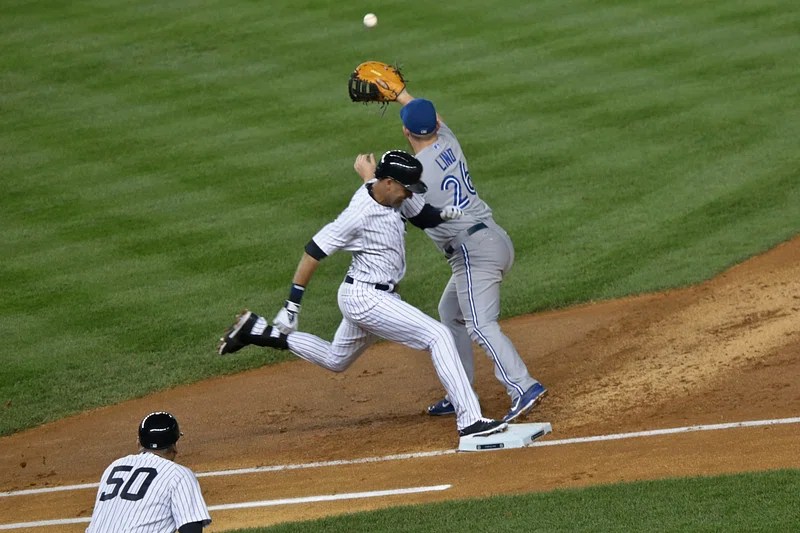
Does end-of-year intensity lead to longer MLB games?
In baseball, they say every win and loss is worth the same over the course of the 162-game season and mathematically they are right. However, it does not feel that way! When the end of the season comes around, it truly seems like wins and losses mean more.
With 11 or 12 games remaining for most teams, it feels like games are longer and that pitchers have a shorter leash if they are not performing meaning there are more frequent pitching changes. It also feels like hitters are taking more pitches. In the September 16th game between Cleveland and Minnesota at Progressive Field, the Twins forced starter Matthew Boyd to pitch a full count to 3 consecutive batters and made Guardians pitchers reach a full count to 7 out of 10 batters between the 2nd and 4th innings. Boyd was quickly replaced after only 2 and 2/3 innings and 64 pitches thrown. Longer at-bats and more pitching changes would explain why games are longer.
Games are not significantly longer however, and this feeling of drawn on intensity may arise out of sheer fandom without much statistical backing. For the purposes of this article, we analyzed game length for 9 teams: the ones that currently make up the 6 wild card spots and the teams in top contention for one of those spots (within 2 games of the lowest ranked wild card team in each league). These teams are the Twins, Royals, Tigers, Mariners, Orioles, Padres, Mets, Braves, Diamondbacks. We chose these teams with the idea that their games would be the most intense as they determine whether they make the playoffs. We assumed that teams leading their respective divisions may not play as intensely as they already have a bye to the second round of the playoffs if they win their division and a wild card spot if they do not, and teams that are not in the playoff race do not have much to compete for anymore.
As of September 16th, across MLB, the average game length throughout the 2024 season is 2 hours and 38 minutes (or 158 minutes). Over their last 10 games, the nine teams we mentioned earlier have an average game length of 2 hours 39 minutes and 30 seconds (or 159.5 minutes). The variation is insignificant and end-of-year intensity therefore has no impact over length of games.
On the other hand, we begin to factor in other elements of the game, perhaps ones that have made MLB games shorter over the last two seasons. These would include the introduction of the pitch clock, the limit to the number of pickoffs a pitcher can attempt per at-bat (3), the minimum number of batters a pitcher must face when entering a game (also 3), and the ghost runner starting on 2nd base in extra innings. These new rules seem to have standardized the length of games. Regardless of the standings, whether a team “needs” a win or is not too worried about losses, games remain the same length on average (approximately 2 hours and 40 minutes).
Throughout the 2010s and until 2022, Major League Baseball realized there was a steady decrease of annual TV viewership (except for the COVID year). To combat the downward trend, new rules were introduced to the game in 2023. Despite these new rules, games remain over 2 and a half hours on average.
Is this still too long for our current lifestyles and attention spans, and is it pushing fans away from baseball towards other sports? Stay tuned!

 RK Sports
Leave a comment